The Fortress
Self-contained, capable, and closeness reads as pressure before it reads as love.
Avoidant attachment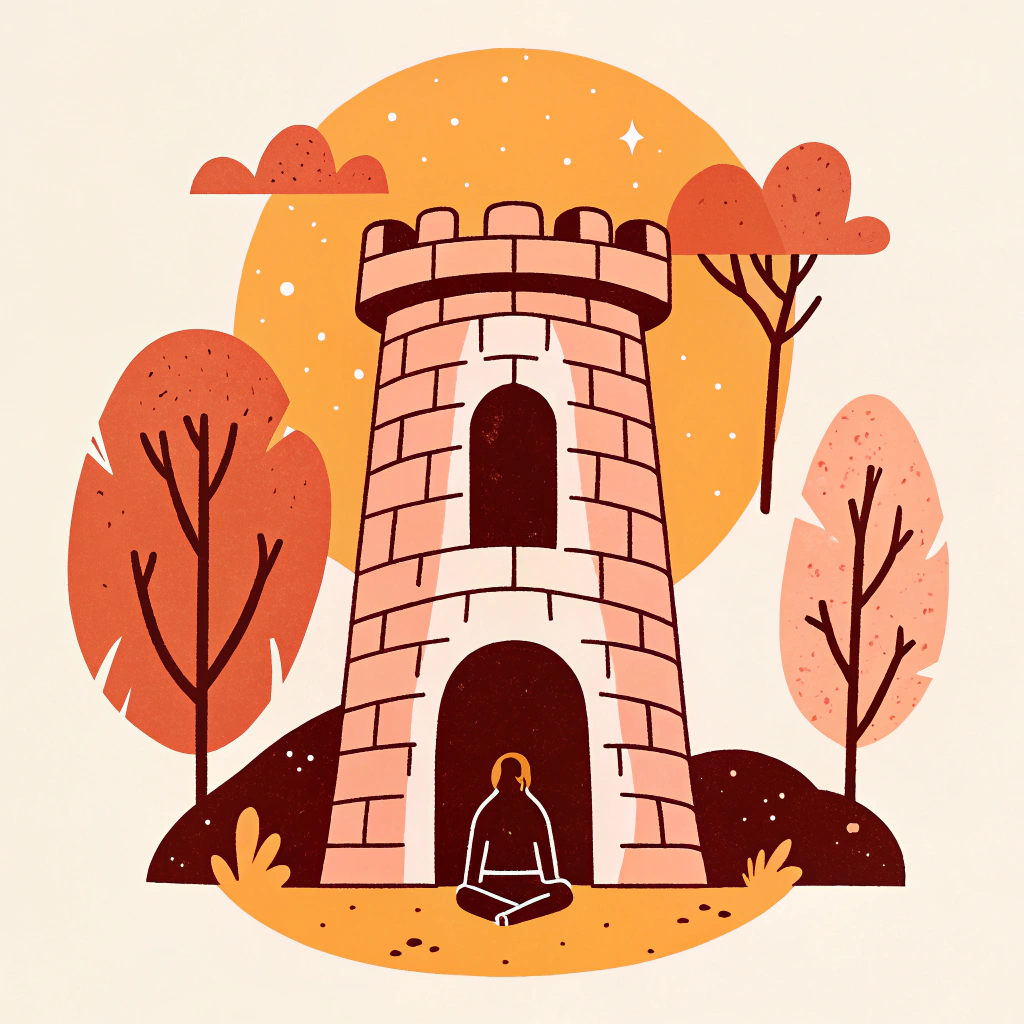
Fortresses are the people everyone describes as calm, independent, together. What nobody sees: intimacy registers as demand before it registers as warmth, and the instinct, quiet, automatic, almost polite, is to make space. A slow reply. A busy week. A flaw list that appears from nowhere, usually right after the closest weekend yet.
Attachment research calls this the avoidant style. It isn't coldness. It's a strategy: somewhere along the way, needs were best handled privately, and self-sufficiency became the safest room in the house. The strategy still works, that's the problem. It works so well that nobody, including you, gets to see what it costs.
The signs
You don’t need all of them. Most Fortresss recognise seven or eight, usually with one wince.
- You leave messages unread for a day, even when you care
- “Where is this going?” conversations get dodged for as long as humanly possible
- When things get close and good, you catch yourself finding small flaws in them
- A partner asking for space feels like being able to breathe again
- In arguments you shut down and need to leave the room to think at all
- Your past relationships ended because “they wanted more than I could give”
- Being fully known sounds uncomfortable, some doors stay closed
- You feel most fond of people shortly after leaving them
- Jealousy is rare; feeling crowded is not
- You process feelings alone, and surface days later as if nothing happened
The loop
- Approach. Someone gets close. Early on this is fine, enjoyable, even. You're charming at a distance of one metre.
- Crowding. The closeness starts to register as expectation: texts to answer, feelings to manage, a person with a claim.
- Exit prep. The flaw list starts. Not because they changed, because the closeness did.
- Retreat. Space, taken without announcement: the quiet day, the busy week, the unread thread.
- The push. They feel the drawbridge rise and push for contact, which confirms that closeness is demanding.
- Confirmation. You retreat further, they eventually stop pushing, and the fortress is quiet again. And a little emptier.
Where it breaks: The loop breaks at retreat, not by not taking the space, but by announcing it. “I need a day; it isn't about you” is the single sentence that changes this pattern's entire cost structure.
The strengths nobody mentions
Fortresses bring real gifts: steadiness under pressure, genuine self-sufficiency, a talent for not making everything a crisis. You don't flood, you don't cling, and in a real emergency you're the one still thinking. The work isn't to need people more; it's to let the people you already trust see the working parts, announced, out loud, while the feeling is still small.
The Fortress with the other three
The classic collision: their warmth pulls you in, then their pursuit crowds you out, and your silence lights their alarm. The treaty that works: you announce your retreats, they stop chasing announced ones.
Two closed doors can be surprisingly peaceful, and quietly starving. These relationships rarely blow up; they evaporate. Somebody has to knock first, on purpose, regularly.
The easiest fit, an Anchor doesn't read your space as rejection. The risk runs the other way: their patience makes it easy to never open the doors at all.
Three scripts to steal
Before going quiet“I need a quiet night to myself, it isn't about you. I'll call you tomorrow.”
When you return“I went quiet because I was overwhelmed and didn't have the words yet. I'm back, and I'd rather tell you that than leave you guessing.”
Mid-argument shutdown“I can't think and talk at the same time right now. I'm not leaving the conversation, give me an hour and we finish this.”
What change actually looks like
Change for a Fortress is not becoming effusive. It's taking the same space out loud instead of in secret, and letting one held feeling be seen at size two instead of discovered at size eight. Announced distance costs a sentence; unannounced distance costs relationships.
Most people are a blend. Find your exact mix.
The free 5-minute quiz reads your twelve answers and shows your primary pattern, your secondary trace, and the loop they build together.
Take the free quizQuestions people ask
Do Fortresses actually feel less?
No, the research is clear that avoidant people feel plenty; the processing just happens privately and on a delay. The famous version: fine for months after a breakup, flattened by it in month four.
Why do I sabotage things that are going well?
Usually it isn't sabotage, it's the crowding alarm. The flaw list and the sudden urge for space follow closeness the way thunder follows lightning. Track the 24 hours before the urge; the correlation is rarely subtle.
Can a Fortress change without becoming someone else?
Yes. The whole program is two moves: announce the retreat, and volunteer one real disclosure a week. Nobody needs you to become a talker. They need the door handle to turn from the inside occasionally.